


Fragrance Oil Flashpoints for Candle Making: Beginner Guide + Gel Candle Safety Tips
Learn what fragrance oil flashpoints are, why they matter in candle making, and how they affect shipping, storage, gel candle safety, and handling. Beginner-friendly guide with FAQs.
Fragrance Oil Flashpoints for Candle Making: What They Are & Why They Matter
If you’ve been candle making for a little while—whether as a hobby or as the beginning of your handmade business—you’ve probably seen the word flashpoint listed on fragrance oils or Safety Data Sheets. At first glance, it can sound technical or even alarming. Words like “flash” tend to get our attention!
The good news? Flashpoints are much simpler than they seem, and understanding them helps clear up a ton of common beginner myths around fragrance performance, safety, and gel candle making. With just a little knowledge, flashpoints stop being intimidating and turn into a useful piece of candle-making literacy.
What Is a Flashpoint? (Simple Candle Maker Definition)
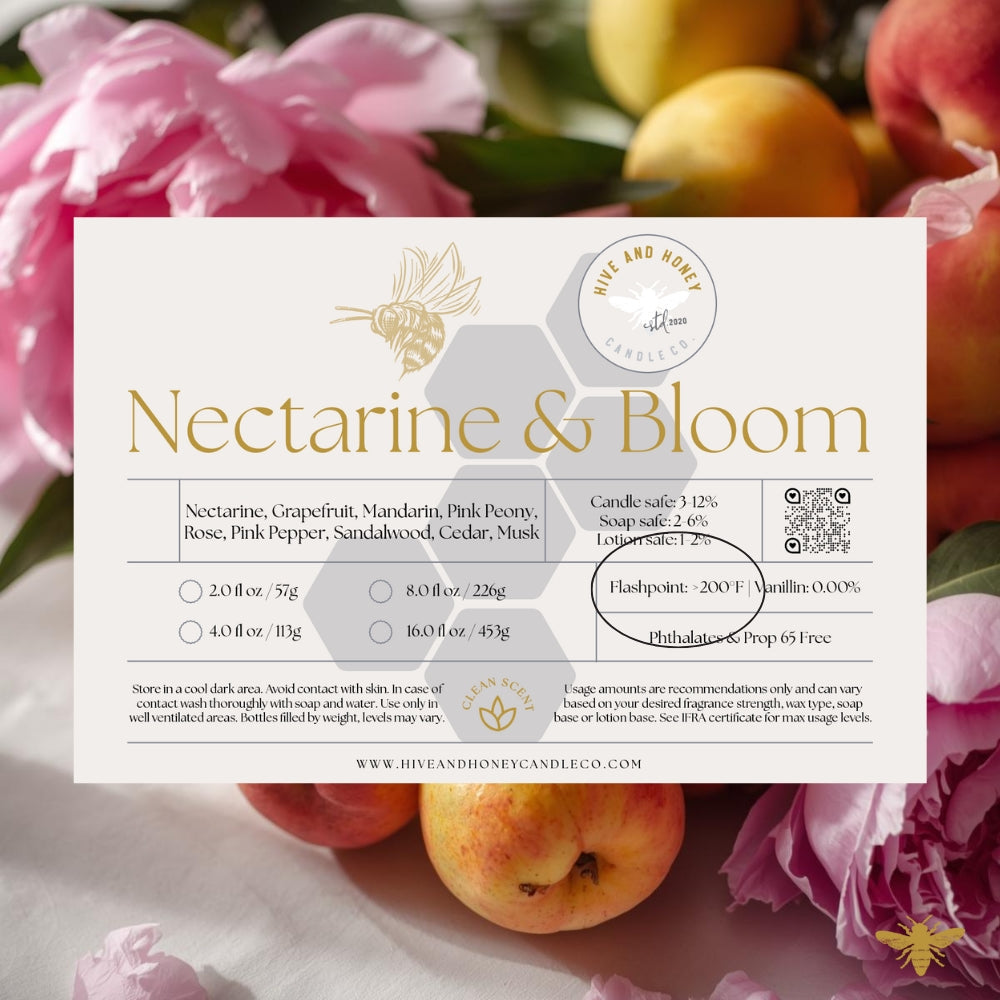
A flashpoint is the temperature at which a fragrance oil can briefly ignite if exposed to a spark or open flame.
A few important notes right away:
✔ this applies to the raw fragrance oil itself, not a completed candle
✔ it does not mean fragrance oil bursts into flame at that temperature under normal candle making
✔ it is primarily a safety + transportation measurement
Most candle fragrance oils fall within the range of:
- 140°F – 200°F (60°C – 93°C)
And in most cases, your wax melting and mixing process won’t reach a dangerous threshold for ignition because there’s no open flame in contact with the raw oil.
What Flashpoints Do Not Mean
Here’s where beginners get tripped up. Flashpoints are not about:
✘ how fast fragrance evaporates
✘ whether fragrance “burns off” during candle making
✘ how strong hot throw will be
✘ how much scent cold throw will have
✘ whether a candle is safe to burn
✘ whether fragrance is “good quality”
Those things are influenced by completely different variables like wax chemistry, wick sizing, cure time, fragrance load, and solvent composition.
The Most Common Flashpoint Myth
There’s a popular myth that if you add fragrance oil to wax above its flashpoint, the scent will “burn off.”
This is not true.
Flashpoint is about ignition safety, not fragrance performance. The fragrance doesn’t mysteriously evaporate into the air at flashpoint temperatures during normal candle making.
If you’ve ever overheated your candle wax and felt like the fragrance was weaker, one of these was more likely the cause:
- wax got overheated and crystal structure changed
- fragrance didn’t bind well
- wick choice was off
- fragrance load exceeded solubility
- cure time was too short
- wax type wasn’t well suited for the oil
Understanding this helps eliminate unnecessary fear around mixing temperatures.
Why Flashpoints Exist (The Real Reason)
Flashpoints exist primarily for:
✔ shipping regulations
✔ storage safety
✔ labeling requirements
✔ SDS compliance
Certain fragrance oils are labeled as “Ground Shipping Only” because low flashpoints make them hazardous for air transport.
If you’ve ever tried international shipping or bought oils from a supplier who ships overseas, you’ve likely seen flashpoint restrictions in action.
For example:
- Fragrance oils with flashpoints below 140°F (60°C) are often classified as flammable liquids under air transport rules.
- Oils above that threshold ship much more freely.
This is the most meaningful real-world impact flashpoints have on candle makers and suppliers.
Does Flashpoint Matter for Candle Performance?
For most candle types, the answer is no.
Flashpoint does not determine:
- hot throw
- cold throw
- burning strength
- scent quality
- fragrance longevity
- wick compatibility
- cure duration
- pour temperature
You do not need to pour candles below the flashpoint. That myth comes from confusing flashpoints with evaporation rates or essential oil volatility.
Where Flashpoint Does Matter: Gel Candles
Now here’s the important exception—and one many beginners don’t learn until later:
Flashpoint matters for gel candle making.
Gel candles use a very different system than container waxes. Gel wax is composed of mineral oil + polymer resin, and its working temperatures are significantly higher.
Typical gel wax temperatures can range from:
- 200°F – 220°F (93°C – 104°C)
These temperatures can come close to or exceed the flashpoints of some fragrance oils, especially citrus-forward, solventy, or essential-oil-based blends.
Because of this, flashpoint matters in gel candles for two big reasons:
1. Gel Candle Safety & Ignition Risk
If a fragrance oil has a low flashpoint, heating gel and oil together can create:
- flammable vapor environments
- increased fume concentration
- ignition risk in the presence of flame or spark
This is why gel candle makers are advised to use oils labeled:
✔ “Gel Safe”
✔ “Compatible with Gel”
These fragrances typically have:
- higher flashpoints
- better solubility in mineral oil bases
- lower volatility during heating
2. Gel Candle Clarity & Solubility
Gel candles are prized for their crystal-clear appearance. Certain fragrance oils can cause:
- cloudiness
- hazing
- separation
- sediment
- microbubbles
While flashpoint isn’t the only factor in this, higher flashpoint oils often dissolve better in gel wax and maintain clarity.
Gel candles are prized for their crystal-clear appearance. Certain fragrance oils can cause:
- cloudiness
- hazing
- separation
- sediment
- microbubbles
While flashpoint isn’t the only factor in this, higher flashpoint oils often dissolve better in gel wax and maintain clarity.
Beginner Takeaway for Gel Candles
If you’re making gel candles:
✔ always choose gel-safe fragrance oils
✔ avoid low flashpoint oils
✔ heat slowly and consistently
✔ don’t exceed recommended gel temperatures
Unlike soy, coconut, or paraffin container candles, gel candles give flashpoints a more practical role.
Where to Find Flashpoint Information
Most reputable candle suppliers share flashpoints on:
- product listings
- SDS (Safety Data Sheets)
- IFRA certificates
- wholesale documents
If you’re sourcing fragrances from outside candle-specific suppliers (like perfume or craft vendors), flashpoint info may not always be provided, which is a red flag for gel candle use.
Flashpoint & Essential Oils
Essential oils also have flashpoints—some are noticeably lower, especially citrus oils (lemon, orange, grapefruit). Citrus oils are frequently restricted for air shipping for that reason.
Low flashpoints do not mean low scent performance, just as high flashpoints don’t automatically mean better throw.
Flashpoint & Candle Safety
For standard wax candles (soy, coconut, paraffin, coco-apricot, beeswax):
✔ flashpoint is not a consumer safety risk
✔ wick combustion happens well above flashpoint
✔ the fragrance is dispersed safely through oxidation
Candles are engineered so that fragrance never pools as a raw liquid near flame in amounts that could ignite.
Flashpoint & Beginner Candle Businesses
If you transition from hobbyist to small candle business, flashpoints pop up more often in:
- SDS documentation
- wholesale compliance
- international shipping
- dropshipping logistics
- private label production
- customs paperwork
Knowing the lingo helps you communicate professionally with suppliers and distributors.
Beginner Summary
To make it short and sweet:
✔ Flashpoint = ignition temperature of raw fragrance
✔ It mostly affects shipping & SDS compliance
✔ It does not determine throw or pour temps
✔ Gel candles are the main practical exception
✔ Beginners don’t need to memorize flashpoints
✔ Businesses eventually benefit from knowing them
FAQ
Q: Will fragrance burn off if added above flashpoint?
No. Flashpoint is not about evaporation or scent performance.
Q: Does flashpoint affect hot or cold throw?
Not at all. Throw depends on wax, wick, chemistry, and load.
Q: Why are some fragrance oils “ground shipping only”?
Because lower flashpoints make them flammable under air transport rules.
Q: Do flashpoints matter for gel candles?
Yes. Gel wax heats higher and requires gel-safe, higher-flashpoint fragrances.
Q: Should beginners worry about flashpoints?
Not really—unless you’re making gel candles or shipping oils internationally.
Q: Are essential oils low flashpoint?
Some are, especially citrus oils, which can also face shipping restrictions.
Q: Does flashpoint mean a candle will catch fire?
No. Flashpoint applies to the raw oil before it’s mixed into wax.
Final Thoughts
Flashpoints can feel technical at first, but once you understand them, they make perfect sense in the world of candle making. For everyday soy, coconut, and paraffin candles, flashpoints are mainly a behind-the-scenes shipping and documentation detail. For gel candles, they play a more active role in safety and compatibility.
The more you grow as a candle maker, the more these small pieces of knowledge connect—improving your confidence, your product quality, and your professionalism within the craft.


Leave a comment
This site is protected by hCaptcha and the hCaptcha Privacy Policy and Terms of Service apply.